

You can use VBA to select multiple items from an Excel drop-down list and keep them together in the same cell.
One of my colleagues asked me if it is possible to make multiple selections in a drop-down list in Excel.
When you create a drop-down list, you can only make one selection. If you select another item, the first one is replaced with the new selection.
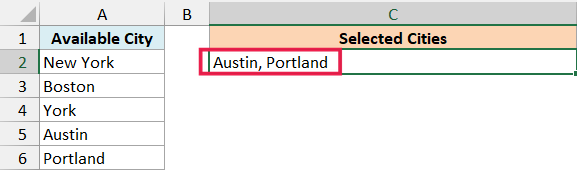
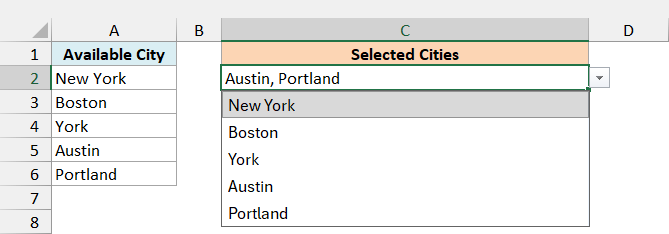
He wanted to make multiple selections from the same drop down in such a way that the selections get added to the already present value in the cell.
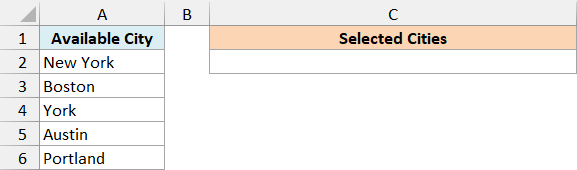
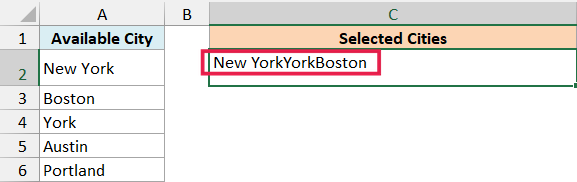
Something as shown below in the pic:
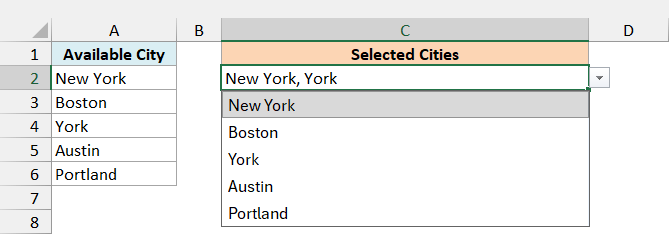
In this tutorial, I will show you how to make multiple selections in an Excel drop-down list (with repetition and without repetition).
This has been one of the most popular Excel tutorials on this site.
Follow along with the example file
Multiple Selections in Excel Drop Down List.xlsm
Watch Video – How to Select Multiple Items from an Excel Drop Down List
The video shows the original approach. Use the code below for the examples here, including the corrected check that treats New York and York as different cities.
Create the Drop-Down List
There are two parts to creating a drop-down list that allows multiple selections: creating the list and adding the VBA code to the worksheet.
Excel’s standard Data Validation list doesn’t have a setting that keeps successive choices in one cell. The VBA below adds that behavior; a formula or Office Script isn’t a direct replacement for this selection-change event.
These examples were tested in desktop Excel on Windows. Excel for the web cannot run VBA, and this workbook has not been tested on Mac.
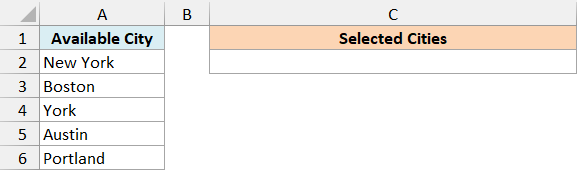
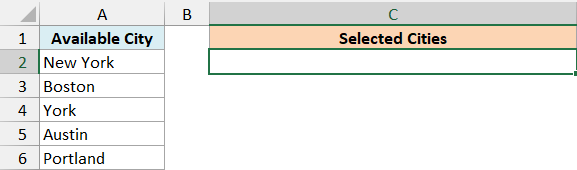
Below I have a list of cities, and I want to select several of them in cell C2.
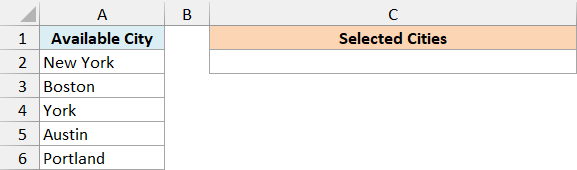
The example file already has the lists and code. If you’re building this in your own workbook, enter the five cities in A2:A6, then follow these steps:
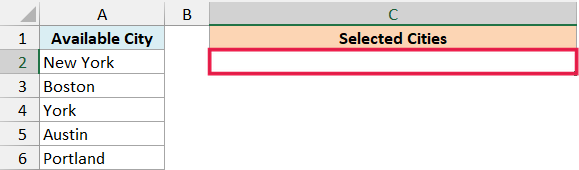
- Select cell C2, or select the range of cells where you want the drop-down lists.
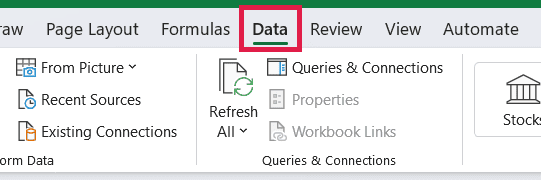
- Click the Data tab.
- Click Data Validation in the Data Tools group.
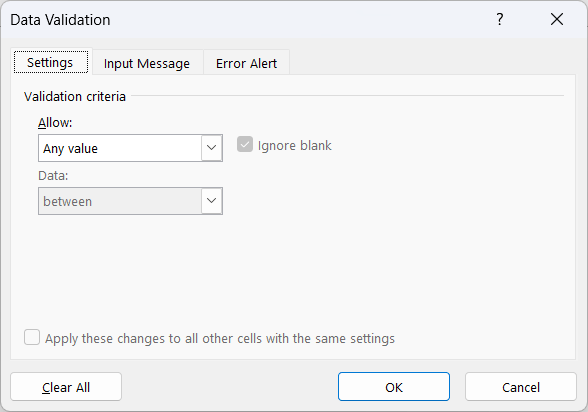
- On the Settings tab, choose List from the Allow menu.
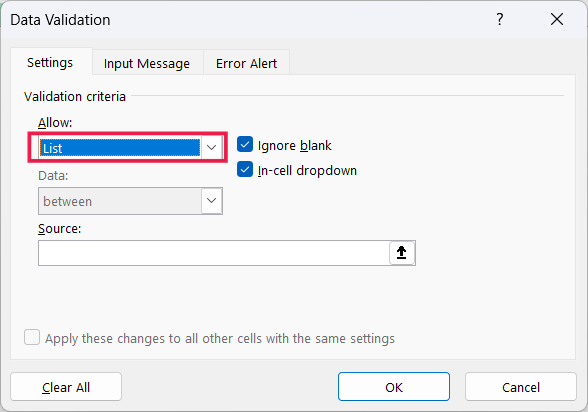
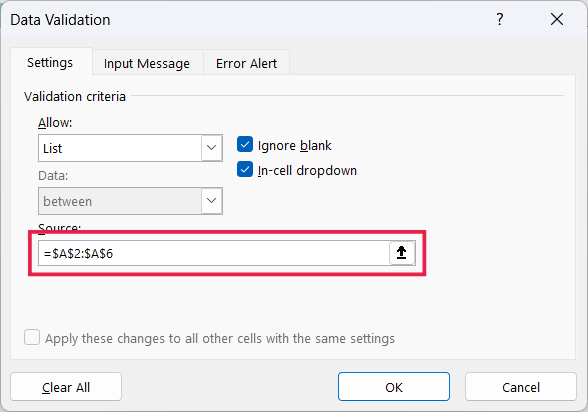
- In the Source field, enter
=$A$2:$A$6.
- Click OK.
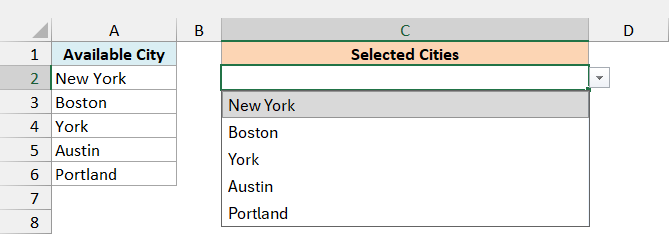
Now, cell C2 has a drop-down list showing the cities in A2:A6. At this point, choosing another city still replaces the previous one.
Select Multiple Items Without Duplicates
A lot of people have been asking about the code to select multiple items from a drop-down list without repetition.
Below is the city list from the No Duplicates sheet, where the selections will go into C2.
Here is the VBA code. Copy the entire block, including the helper function at the end:
Option Explicit'Paste into the worksheet's code module, not a standard module.'Use the drop-down or type one valid choice. Bulk edits replace values.'Ordinary paste can replace validation. Use Paste Values for a single choice.'Other VBA that writes to these inputs must disable events around its writes.Private Sub Worksheet_Change(ByVal Target As Range) Const InputCells As String = "C2" Const Separator As String = ", " Const AllowRepeats As Boolean = False Dim NewValue As String, OldValue As String, Result As String Dim Entry As Variant, AlreadySelected As Boolean Dim PreviousEvents As Boolean, EventsChanged As Boolean Dim Undone As Boolean, Failure As String Dim ValidChoice As Boolean If Target.CountLarge <> 1 Then Exit Sub If Intersect(Target, Me.Range(InputCells)) Is Nothing Then Exit Sub If Not HasListValidation(Target) Then Exit Sub On Error GoTo Failed If Not IsError(Target.Value2) Then NewValue = CStr(Target.Value2) If Len(NewValue) = 0 And Not Target.HasFormula And Not IsError(Target.Value2) Then Exit Sub ValidChoice = Target.Validation.Value And Not Target.HasFormula And Not IsError(Target.Value2) PreviousEvents = Application.EnableEvents Application.EnableEvents = False EventsChanged = True Application.Undo Undone = True If IsError(Target.Value2) Or Target.HasFormula Then OldValue = "" Else OldValue = CStr(Target.Value2) End If If Not ValidChoice Then Failure = "Choose one city from the drop-down list. The previous selections have been kept." GoTo Finished End If 'The separator cannot also appear inside an individual list item. If InStr(1, NewValue, Separator, vbBinaryCompare) > 0 Then Failure = "This item contains the selection separator. Choose a separator that is absent from the list items." GoTo Finished End If If Len(OldValue) = 0 Then Result = NewValue Else If Not AllowRepeats Then For Each Entry In Split(OldValue, Separator) If StrComp(CStr(Entry), NewValue, vbTextCompare) = 0 Then AlreadySelected = True Exit For End If Next Entry End If If AlreadySelected Then Result = OldValue Else Result = OldValue & Separator & NewValue End If End If If Len(Result) > 32767 Then Failure = "The selections would exceed Excel's cell text limit. Clear this cell and start a shorter list." GoTo Finished End If Target.Value2 = ResultFinished: If EventsChanged Then Application.EnableEvents = PreviousEvents If Len(Failure) > 0 Then MsgBox Failure, vbExclamation, "Multiple selections" Exit SubFailed: Failure = "The selections could not be combined: " & Err.Description 'Undo may be unavailable for a programmatic edit. Do not undo again. On Error Resume Next If Undone Then Target.Value2 = OldValue If EventsChanged Then Application.EnableEvents = PreviousEvents On Error GoTo 0 MsgBox Failure, vbExclamation, "Multiple selections"End SubPrivate Function HasListValidation(ByVal Cell As Range) As Boolean On Error Resume Next HasListValidation = (Cell.Validation.Type = xlValidateList) On Error GoTo 0End FunctionVBA example by Sumit Bansal, https://trumpexcel.com.
This is a worksheet event: Excel runs it when you change the selection cell. Put it in that worksheet’s code window, not a standard module, and don’t press F5 to run it.
Here are the steps to add it to your workbook:
- Press Alt + F11 to open the Visual Basic Editor.
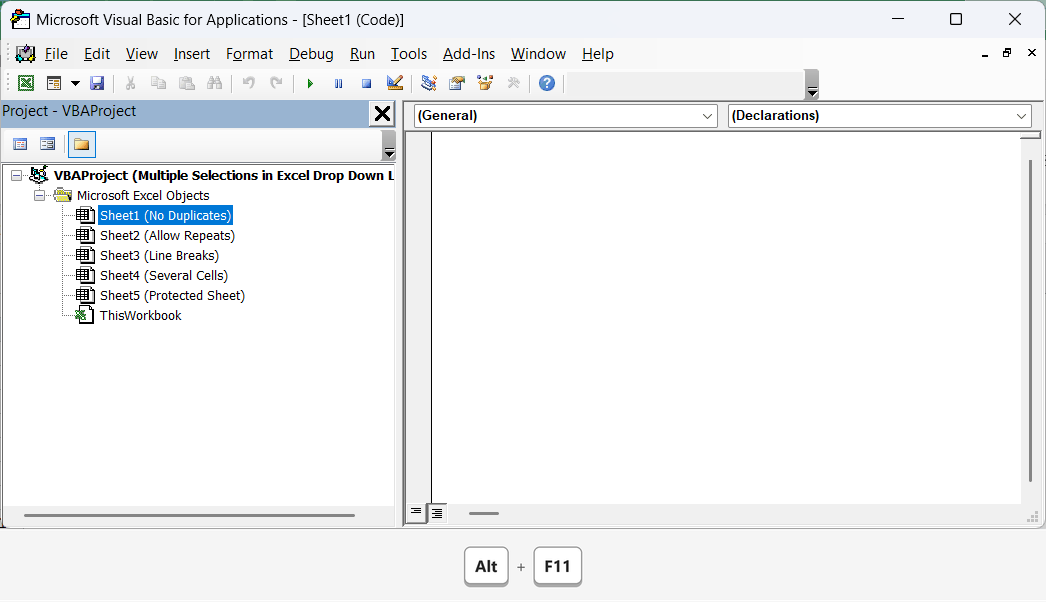
You can also open the editor from the Developer Tab by clicking Visual Basic. If the Project Explorer pane is missing, press Ctrl + R to show it.
- In Project Explorer, expand your workbook’s Microsoft Excel Objects folder.
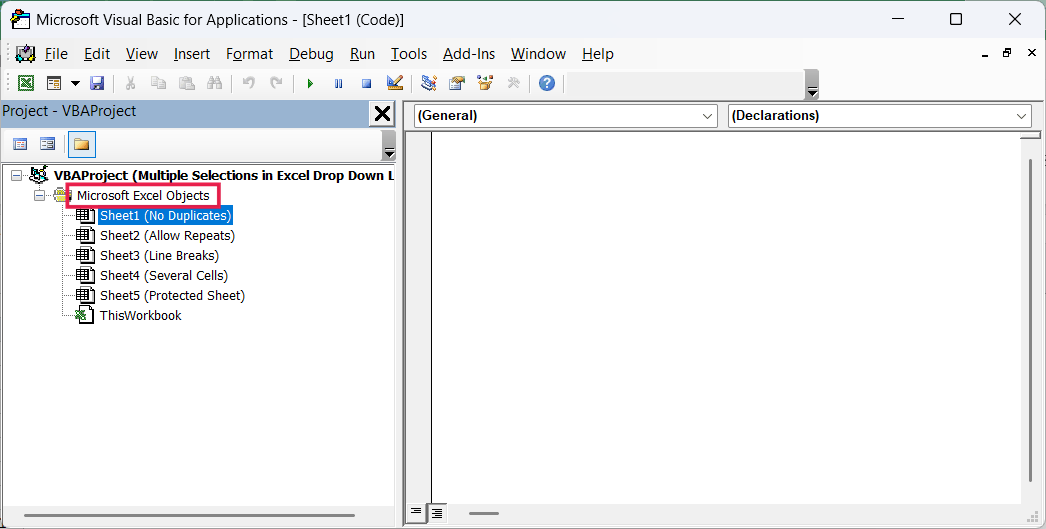
- Double-click the worksheet that contains the drop-down list.
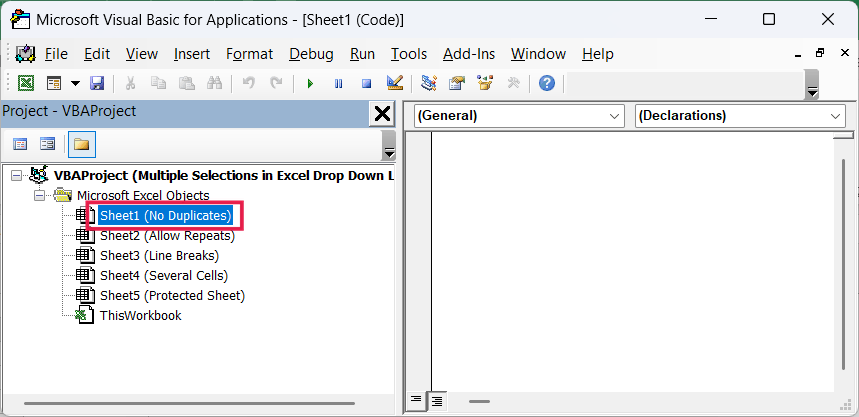
- Paste the complete code into that worksheet’s code window.
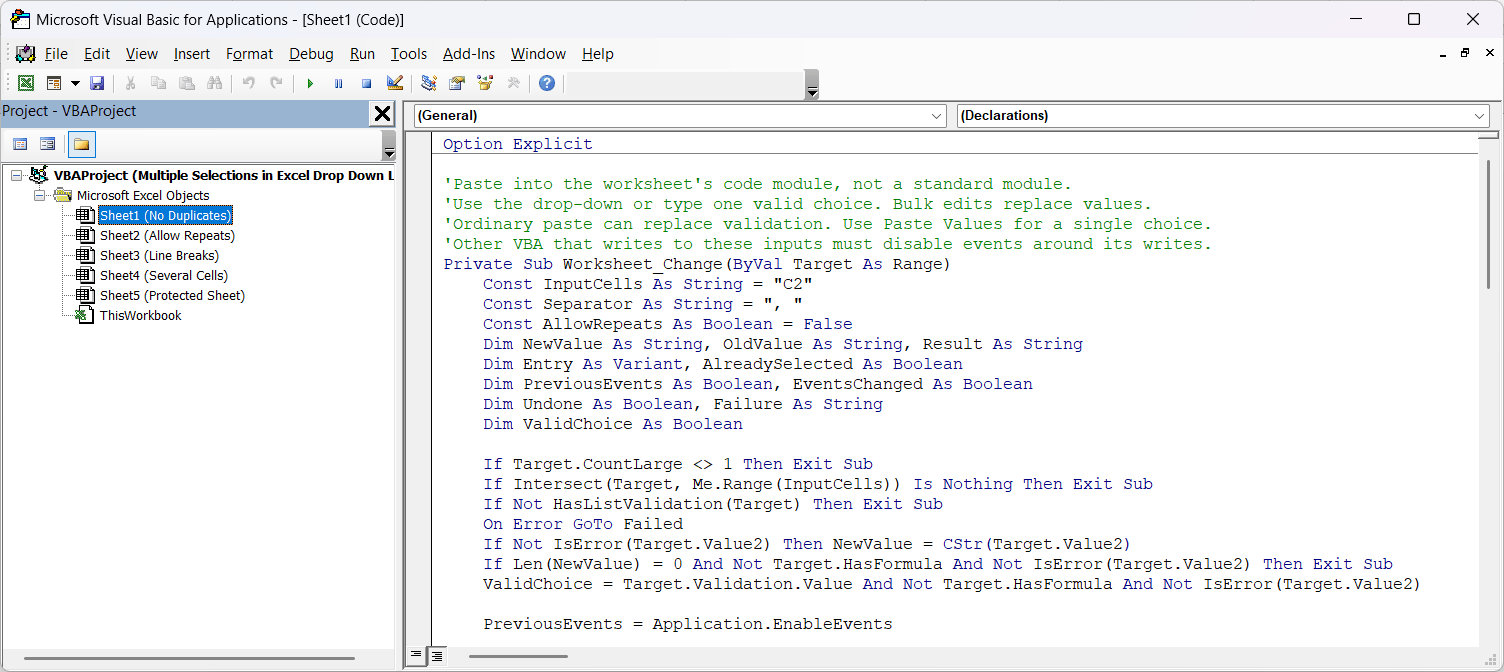
If that sheet already has a Worksheet_Change procedure, don’t paste a second one below it. The two pieces of event code need to be combined into one procedure.
- Close the Visual Basic Editor to return to Excel.
- Save the workbook as Excel Macro-Enabled Workbook (*.xlsm).
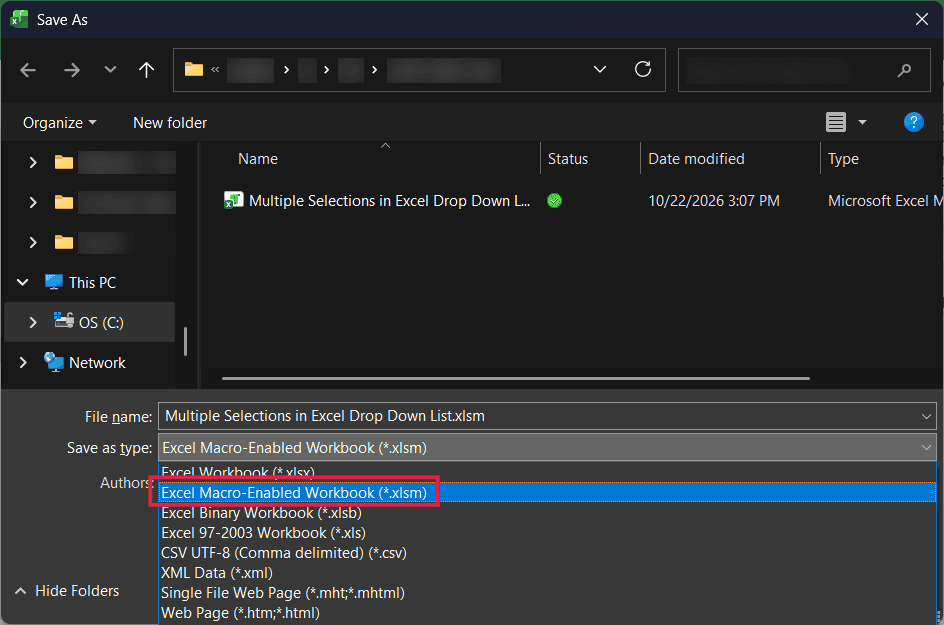
The older .xls format can also store VBA, but use .xlsm for this workbook. Saving as .xlsx removes the VBA needed for multiple selections.
When reopening the workbook, enable macros only if you trust the file. If your organization blocks macros, check with your IT team; you don’t need to enable Trust access to the VBA project object model to run this code.
To try the downloaded No Duplicates sheet, clear C2 first because it contains sample selections. Then choose New York followed by York from the drop-down.
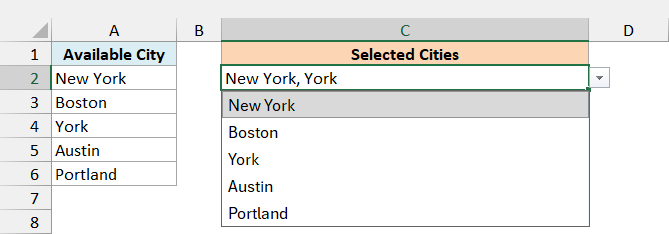
You get New York, York in C2. If you select York again, the value stays the same, because the code compares complete city names rather than looking for one name inside another.
The comparison ignores capitalization, so Boston and BOSTON count as the same choice. Selecting an existing city does not remove it; press Delete to clear the cell and choose the cities again.
The code briefly undoes the new selection to read what was in the cell before, then combines the values. It turns events off while writing the result so that its own change doesn’t trigger the same code again.
Important: This macro uses Excel’s Undo history internally, so you cannot rely on Ctrl + Z to undo its changes. Keep a copy of the workbook before making substantial changes.
Use the drop-down to add one city at a time. Typing one valid city also works, but replacing the cell with a whole comma-separated list isn’t the same as making individual selections.
Ordinary paste can replace the cell’s Data Validation rule and stop the multiple-selection behavior. Use Paste Values for a single choice; the code rejects a value outside the list while keeping your previous selections.
Changes to several cells at once are left as ordinary edits, rather than being appended. If other VBA writes to these cells, that code must disable events around its writes because programmatic changes don’t create the same Undo history as your selections.
Allow Repeated Selections
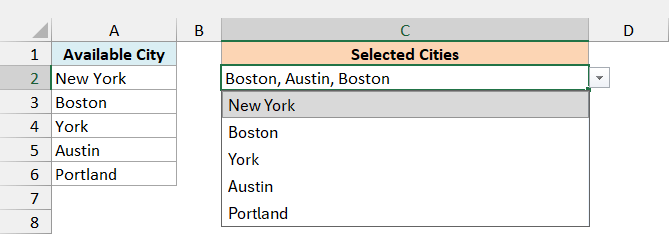
The Allow Repeats sheet has the repetition version already set up in C2. Note that if you select an item more than once, it will be entered again (repetition is allowed).
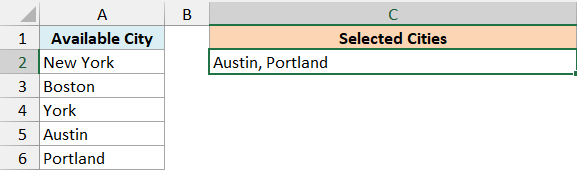
Below is the same city list, with the repeated choices kept together in C2.
In the worksheet code, replace the AllowRepeats line with this one:
Const AllowRepeats As Boolean = TrueKeep the rest of the code, including the helper function, unchanged. Use this setting in the existing procedure rather than adding another copy of Worksheet_Change.
Clear C2 on the downloaded sheet before trying it, because the cell already contains sample selections. Then selecting Boston, Austin, and Boston again gives you Boston, Austin, Boston.
Follow along with the example file
Multiple Selections in Excel Drop Down List.xlsm
Use Multiple Selection in Other Cells
Since I get a lot of similar questions, I have created the following sections to answer some of the most asked questions about this tutorial and the VBA code.
If you have any questions, I request you to go through these sections first.
The code starts with C2 as its target. On the Several Cells sheet, C2, C3, and C4 each keep their own selections from the city list.
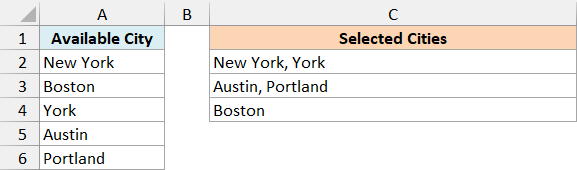
To use those three cells, replace the InputCells line near the top of the code with:
Const InputCells As String = "C2:C4"Make sure each target cell also has a List validation rule. Changing this line tells the macro where to work; it doesn’t create the drop-down lists.
You can use the following range variations in your own workbook. Replace the same InputCells line with the one you need, rather than adding all of them.
For every list-validation cell in column C:
Const InputCells As String = "C:C"For columns C and D:
Const InputCells As String = "C:D"For row 2:
Const InputCells As String = "2:2"For rows 2 and 3:
Const InputCells As String = "2:3"Cells without List validation are ignored, even if they’re inside the specified range. Each worksheet that needs this behavior must have its own event code.
These examples accumulate choices within each cell. If you want a choice used in one cell to disappear from other cells’ lists, see Creating Multiple Drop-down Lists in Excel without Repetition.
Change the Separator or Put Each Selection on a New Line
The comma examples use a comma followed by a space between choices. The Separator setting controls both how values are joined and how the no-duplicates version identifies individual choices.
To use a vertical bar followed by a space, replace that setting with:
Const Separator As String = "| "You can use a space alone with a list of single-word choices:
Const Separator As String = " "A space alone won’t work with this example’s New York entry because that city already contains a space. Choose a separator that appears in none of your list items; the code rejects a choice containing the separator.
Clear any existing selections before changing the separator. Otherwise, the old text still uses the previous separator, so the code cannot reliably split it into individual choices.
For a new line in the same cell, use the Line Breaks sheet. Below is the city list with selections displayed on separate lines in C2.
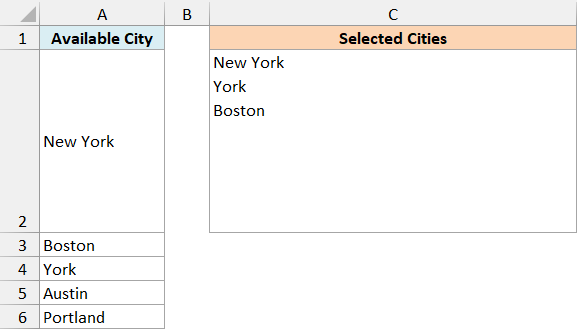
In that sheet’s code, the separator is:
Const Separator As String = vbLfvbLf supplies the line-feed character Excel uses inside a cell. The original example used vbNewLine; this version uses vbLf to insert the Excel cell line break directly.
If you’re adding this version to your own sheet, make the line breaks visible:
- Select the cell containing the selections.
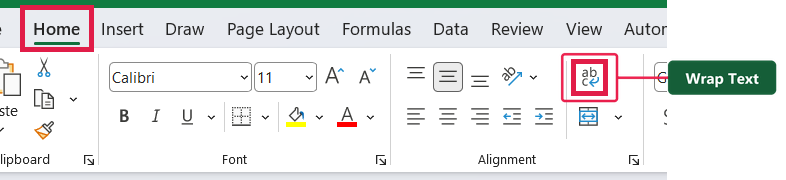
- On the Home tab, click Wrap Text.
- Increase the row height so that all the selected cities are visible.
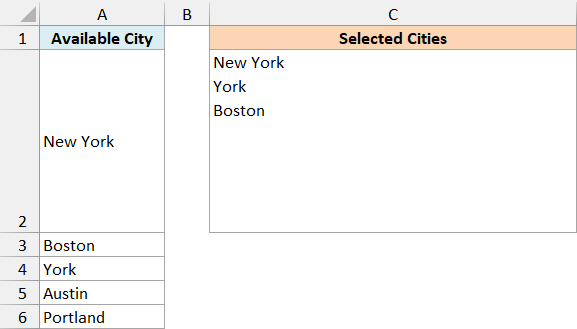
The example file reserves enough height for all five cities. Selecting New York, York, and Boston puts each city on its own line instead of separating them with commas.
Use the Drop-Down on a Protected Sheet
You can keep the city source list protected while allowing selections in C2. The Protected Sheet example does this by leaving C2 unlocked before protecting the worksheet.
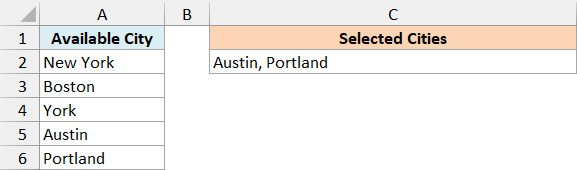
For your own worksheet, set up the drop-down and event code before applying protection. Then follow these steps:
- Select the cells that should remain editable, such as C2.
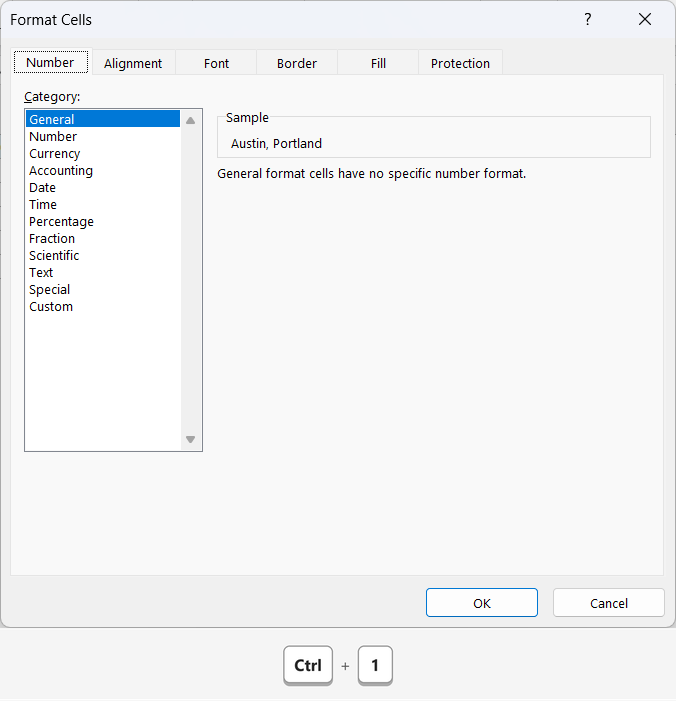
- Press Ctrl + 1 to open Format Cells.
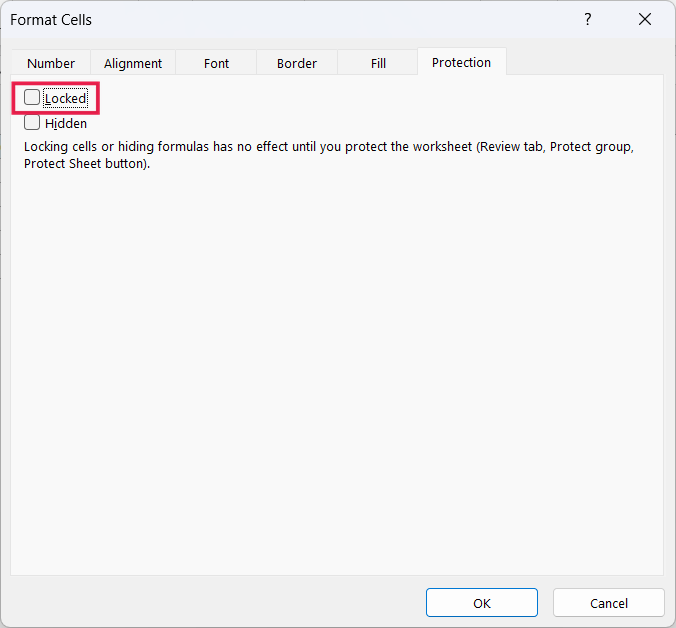
- On the Protection tab, clear the Locked checkbox.
- Click OK.
- On the Review tab, click Protect Sheet.
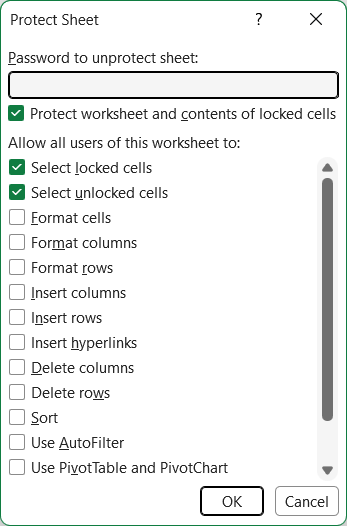
- Choose your protection settings and click OK, confirming your password if you set one.
The macro writes only to the unlocked selection cell, so this version doesn’t need Me.Protect UserInterfaceOnly:=True. The protected example was tested again after closing and reopening the workbook.
The example sheet uses demo as its demonstration password. If you need to change its source list, unprotect the sheet first; for more detail on choosing editable cells, see Lock Cells in Excel.
Follow along with the example file
Multiple Selections in Excel Drop Down List.xlsm
You can now keep several choices in one cell, with or without repeated items. Save the workbook as .xlsm so the code stays with it when you reopen it.
Other Excel Articles You May Also Like:

Thanks a lot for your helpful video! Yet, I have a problem since I got my list of items that I want in the dropdown list on one worksheet called “kritiska varor & tjänster” (in Swedish) and the actual dropdown list in the third column of another sheet. Can I modify the same code row as you mention (i.e. If Target.Address = “$C$2” Then) to make this point to the right worksheet somehow?
Hi Peter… to make this work in a worksheet, you need to put the code in the worksheet code window. So when you open the VB Editor, you will see all the sheet names in a property pane. If you don’t see the property pane, click the view tab and then click on ‘Properties Window’. Double click on the sheet name where you want this code to work and then paste the code in the code window. And then you can modify the code to refer to the right column or cell. Hope this helps!
How to exclude the Header row or the top 3 rows from Target.Column?
You can use something like
Target.Column = 4 AND Target.Row > 3
Can a drop-down list be created just like the one in the video (Multiple Unique Selections) in multiple columns where each column has a different list.
How can the code be adjusted for that?
As of now, the multiple selections are separated by a comma. How can I change this to separate these with space in a column & comma in another column ?
So helpful. Thanks so much!
thanks for all. I can add in one cell multiple selection from list of data validation. But I have a question that, I cannot filter the cells which I added values from data validation. When I filter with the criteria under the column which I applied VB code , It seems like there is nothing at the cell. How can avoid this problem while filtering? Please could you help me
Is there a way to automatically number the entries with a FOR loop as they are added to the target cell. For example, for cell c3, I enter Alpha, Bravo and Charlie. I would would like them to appear in the cell as:
1. Alpha
2. Bravo
3. Charlie
Thanks
This worked amazingly. Thank you so much for your CLEAR instructions and alteration options. Much appreciated!
Hi-Sumit,
I am using Excel 2019, and I have failed to save my workbook because I do not have .xls or .xlsm in the extension list. What should I do? please help
Thank you so much Sumit for this video. I have spent a lot of time trying to create a multiple drop-down list and I had failed. But with your video, I have done it quickly.