

When working with Excel spreadsheets, most people are either short on time or have a deadline to meet.
And it could be a nightmare if, at that point in time, Microsoft Excel decides not to open (arghhhhh!).
Unfortunately, this unexpected behavior is quite common where Excel refuses to open one of your important Excel files, or fails to open the Excel application altogether.
So, if you are suffering from the ‘Microsoft-Excel-won’t-open’ syndrome, this article is just what you need.
In this tutorial, I’ll show you what to try when the Excel app won’t start or an Excel file won’t open.
The fixes are ordered so you can try the quick, likely ones first, starting with the problem you see below.
So let’s get started!
First, Figure Out Which Problem You Have
Before changing anything, check whether Excel itself won’t open or whether it’s just your file. That tells you where to start.
| What you see | Fixes to try |
|---|---|
| Excel doesn’t start, or hangs on the “Starting” screen | Fixes 1, 2, 3, 4 |
| Excel starts, but double-clicking a file opens nothing, or the file opens in the wrong app | Fixes 5, 6, 8 |
| Excel opens to a blank gray window with no workbook | Fixes 6, 9 |
| One specific file won’t open, or an error says it’s corrupt or can’t be opened | Fix 7 |
Since Excel has to work with other applications and the operating system, many things can go wrong. And of course, Excel itself could be the problem.
Here are five possible reasons:
- A problematic add-in. Often you can open the Excel app, but not a specific file or even a new file.
- A corrupt Excel or Office installation that needs repairing.
- A setting that stops Excel from communicating with other apps and Windows through Dynamic Data Exchange (DDE). This applies to older Excel versions only.
- A broken file association, so Windows doesn’t know which app should open your file. People who have upgraded Excel or Windows often hit this issue.
- A corrupt file. This often happens when someone shares a file with you, or when you copy it through a network drive or an external drive.
For a corrupt file, Excel has Open and Repair (Fix 7). And keep backups so it hurts less next time.
Fixes 8 and 9 are for older versions. Microsoft 365 users can skip them.
Fix 1: Excel Won’t Start? Close It Completely in Task Manager
You click Excel and nothing happens, or it hangs on the “Starting” screen.
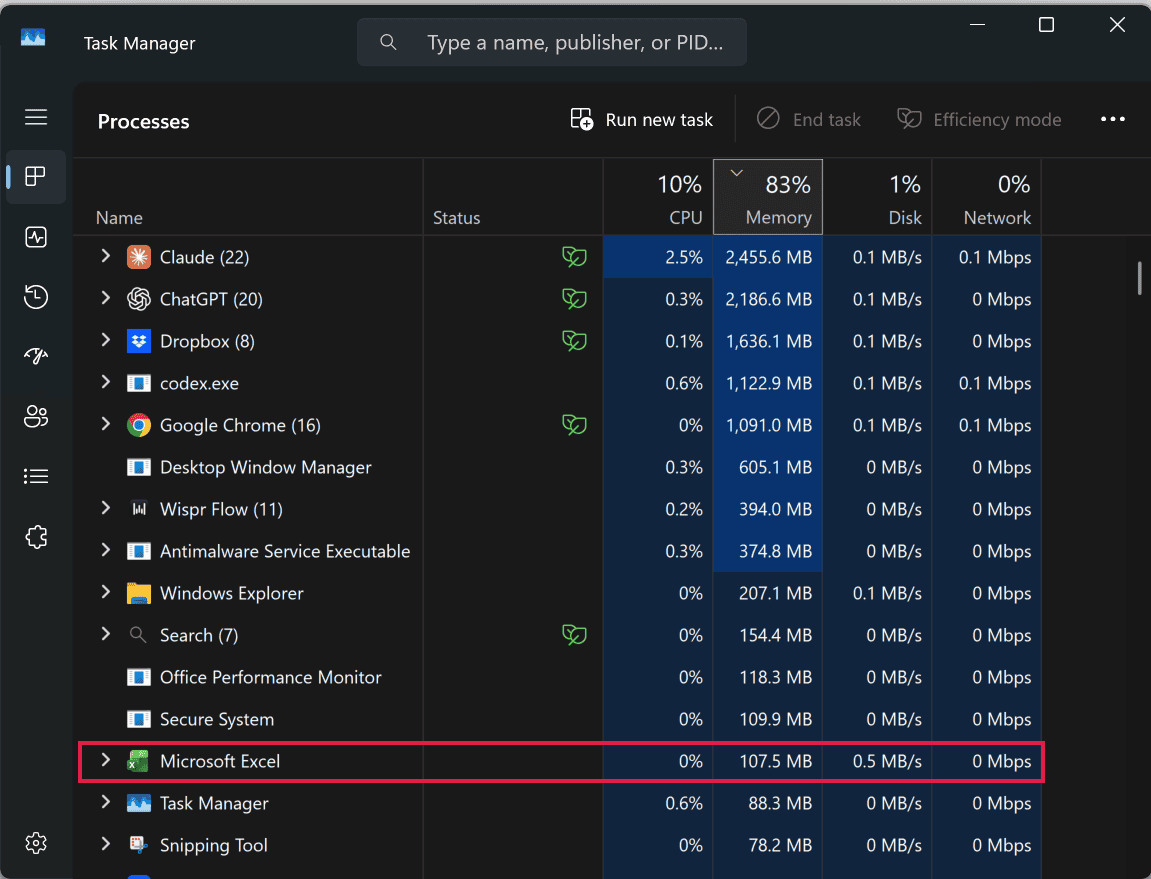
An earlier copy of Excel may still be running in the background because it didn’t close properly or got stuck. That can stop a new copy from opening.
Let’s start by closing that hidden copy. Any unsaved work in it will be lost when you end the task.
- Press
Ctrl + Shift + Escto open Task Manager.
- On the Processes tab, select Microsoft Excel and click End task. Look under both Apps and Background processes, and repeat for every Excel entry.
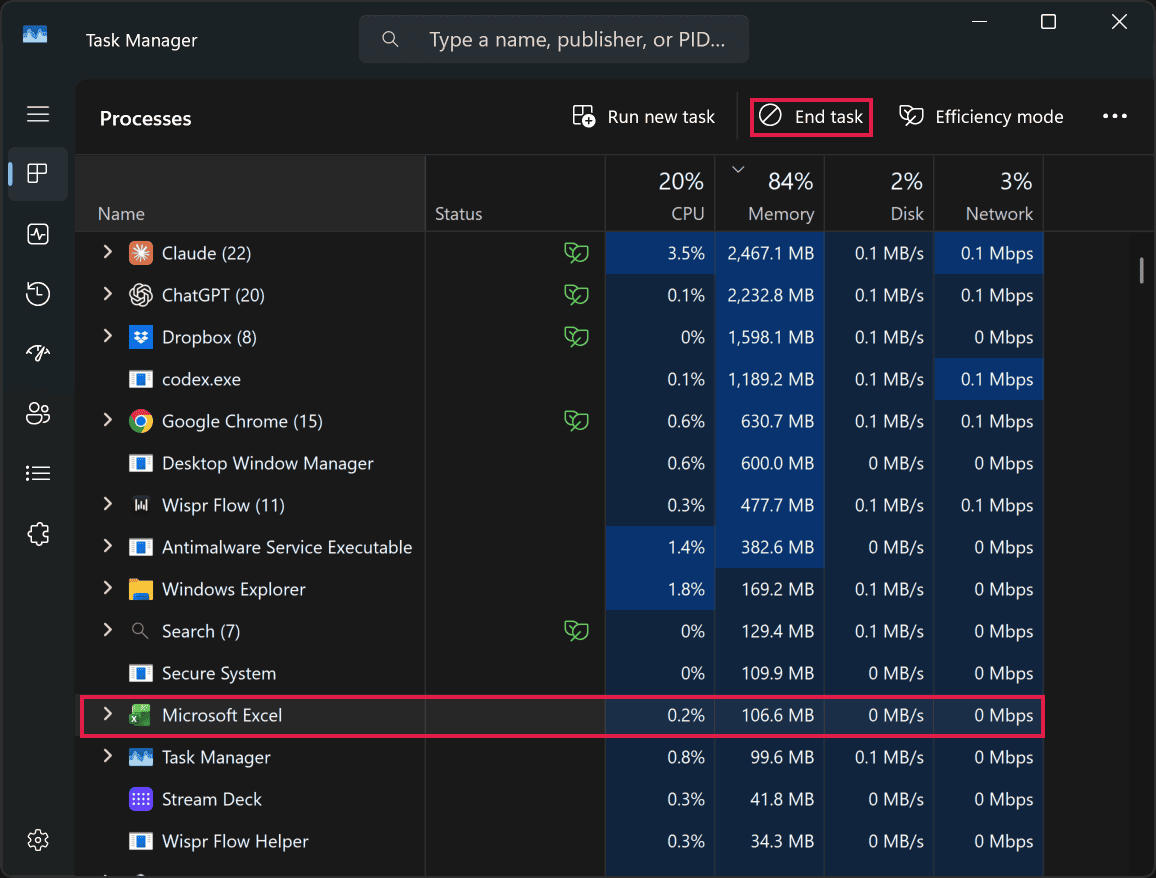
Now open Excel again. If Task Manager feels like too much, restarting your computer also closes the stuck copy.
Fix 2: Excel Not Opening? Start It Without Add-ins
If Excel still won’t start, try opening it without the add-ins and custom settings it normally loads.
You can do this in safe mode. It helps you check whether an add-in or a startup setting is causing the problem.
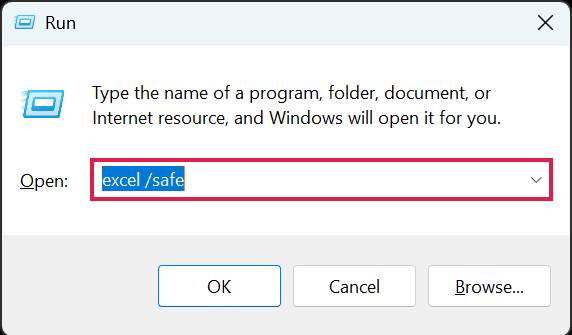
Press Windows + R, type excel /safe in the Run box, and press Enter. Make sure there’s a space before the slash.
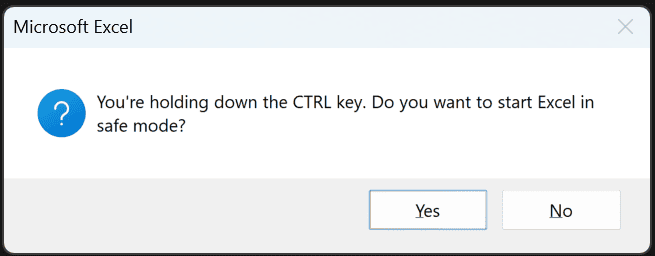
Or hold Ctrl while clicking the Excel icon. Keep holding it until Excel asks whether you want to start in safe mode, then click Yes.
If Excel opens fine here, an add-in or a startup setting is the likely culprit. Go to Fix 3 to check the add-ins.
If it won’t open even in safe mode, skip to Fix 4 and repair Office.
For the full walkthrough, see how to open Excel in safe mode.
Fix 3: Turn Off Excel Add-ins
If Excel opens but a file won’t, or Excel only starts in safe mode, an add-in could be getting in the way.
A lot of people use third-party add-ins to add features that Excel doesn’t have by default. And sometimes these add-ins are the reason your files won’t open.
One of the add-ins that I used to use in my full-time day job days was ‘think-cell’, which allowed us to create beautiful charts that were not possible with Excel itself.
The fix is to turn off the add-ins and test again. Open Excel from the Start menu, or use safe mode from Fix 2 if it won’t start normally.
Here are the steps to turn them off:
- Go to File > Options.
- In Excel Options, go to Add-ins. At the bottom, choose COM Add-ins from the Manage drop-down and click Go.
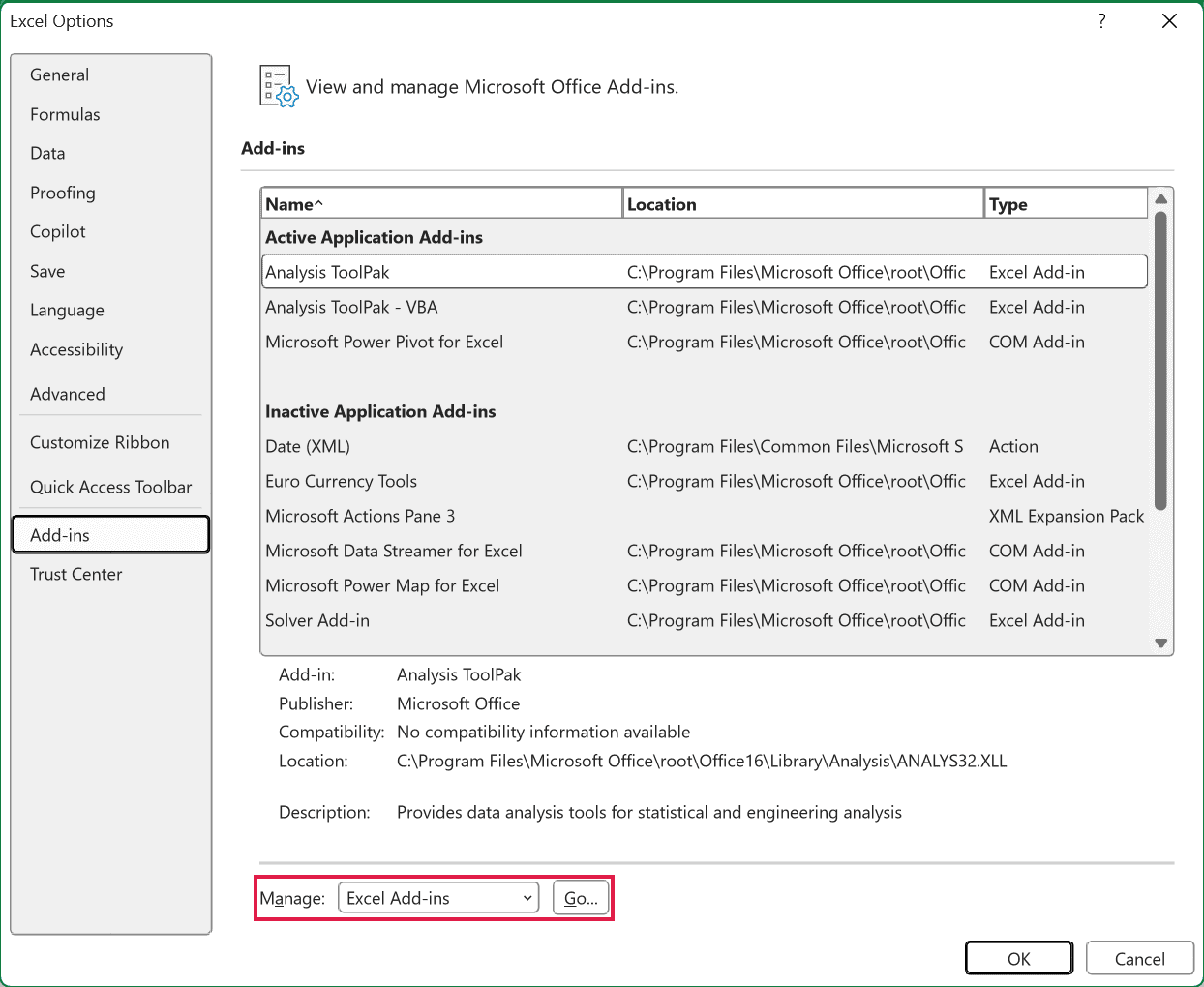
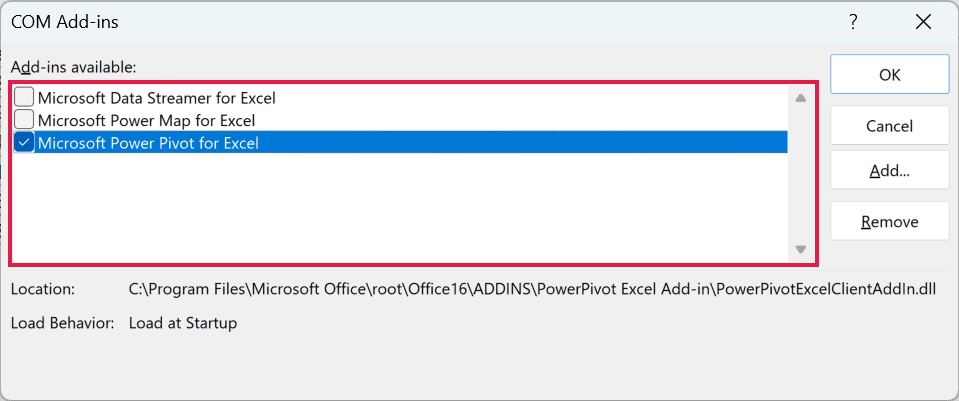
- Uncheck all the add-ins in the COM Add-ins dialog box and click OK.
- Repeat with Excel Add-ins in the Manage drop-down: click Go, uncheck all the add-ins, and click OK.
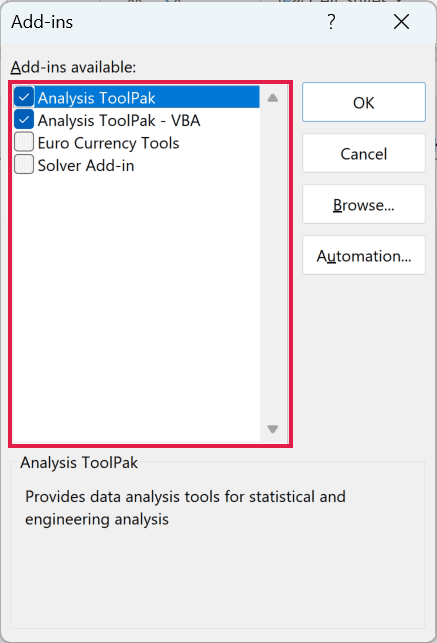
Try opening Excel normally and then the file that wasn’t opening earlier. If an add-in was the issue, it should open now.
Many a time, it’s a one-off issue and the add-in will work perfectly even if you enable it now.
Re-enable the add-ins one at a time, testing after each one. If the problem comes back when you enable an add-in, that one should stay off.
Check the add-in maker’s website for an updated version. If you want to get rid of it, here’s how to remove an add-in completely.
Fix 4: Repair Microsoft Office if Excel Still Won’t Open
If Excel won’t open even in safe mode, or turning off add-ins didn’t help, the Office installation may be corrupt.
It may need repairing or reinstalling. But since reinstalling is a little more work, let’s try the repair option first.
Close all Office apps before repairing. Repairing Office doesn’t touch your files.
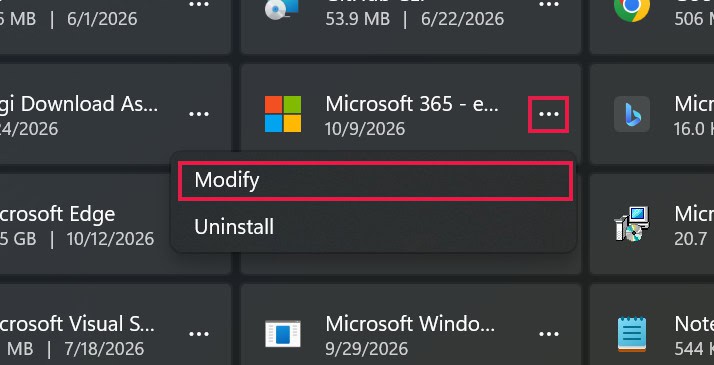
In Windows 11, right-click Start and choose Installed apps. You can also get there through Settings > Apps > Installed apps.
Here are the steps to repair Office:
- Find Microsoft 365 or Microsoft Office in the list. Click the three dots next to it and choose Modify.
- In the How would you like to repair your Microsoft 365 and Office programs? window, select Quick Repair and click Repair.
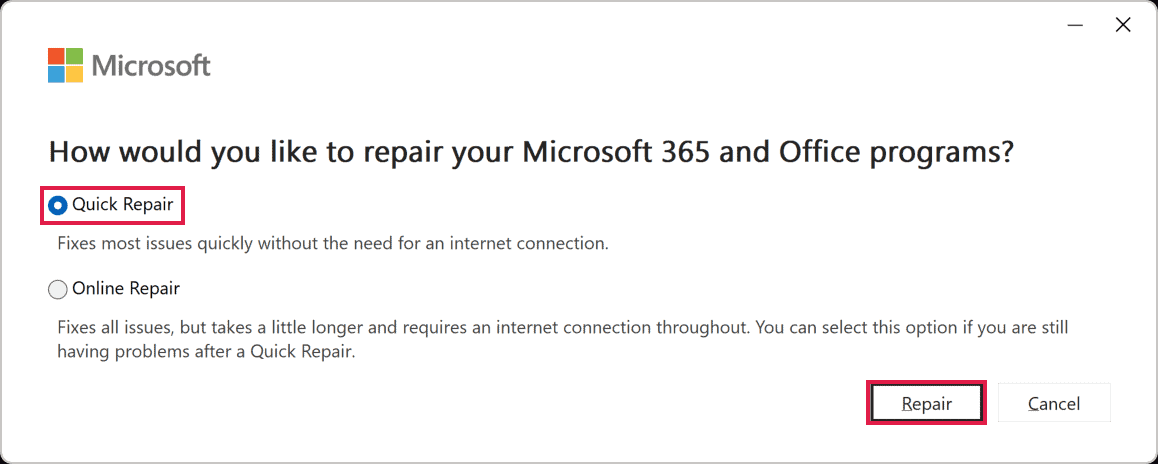
Follow the prompts, and within a few minutes it will repair your Office installation. Then try opening Excel again.
You can also use the original Programs and Features route on Windows 10 or 11. Press Windows + R, type appwiz.cpl, and press Enter.
Find Microsoft Office or Microsoft 365, right-click it, and choose Change. If you see Repair right there, click it instead.
Then choose Quick Repair and click Repair.
Quick Repair is faster and works without an internet connection. If it doesn’t fix things, repeat the repair and choose Online Repair.
Online Repair takes longer and needs an internet connection because it downloads a fresh copy of Office.
If a corrupt Office installation was the issue, this should fix it. In case this method doesn’t work, keep reading!
Fix 5: Excel File Not Opening? Reset the File Associations
If double-clicking an Excel file opens nothing, opens it in another app, or asks which app to use, check the file association.
The file association tells Windows to use Excel when you open an Excel file. When it breaks, Windows no longer knows to use Excel.
Start by fixing just the Excel file types you use. This lets you set Excel as the default app without changing your other app choices.
Here are the steps in Windows 11:
- Go to Settings > Apps > Default apps. In Set a default for a file type or link type, type
.xlsxand click the result.
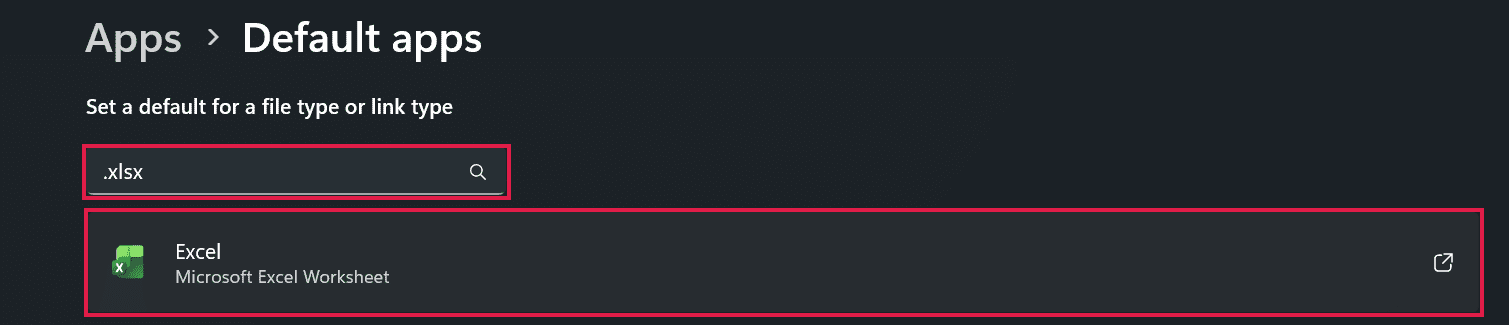
- Choose Excel and click Set default.
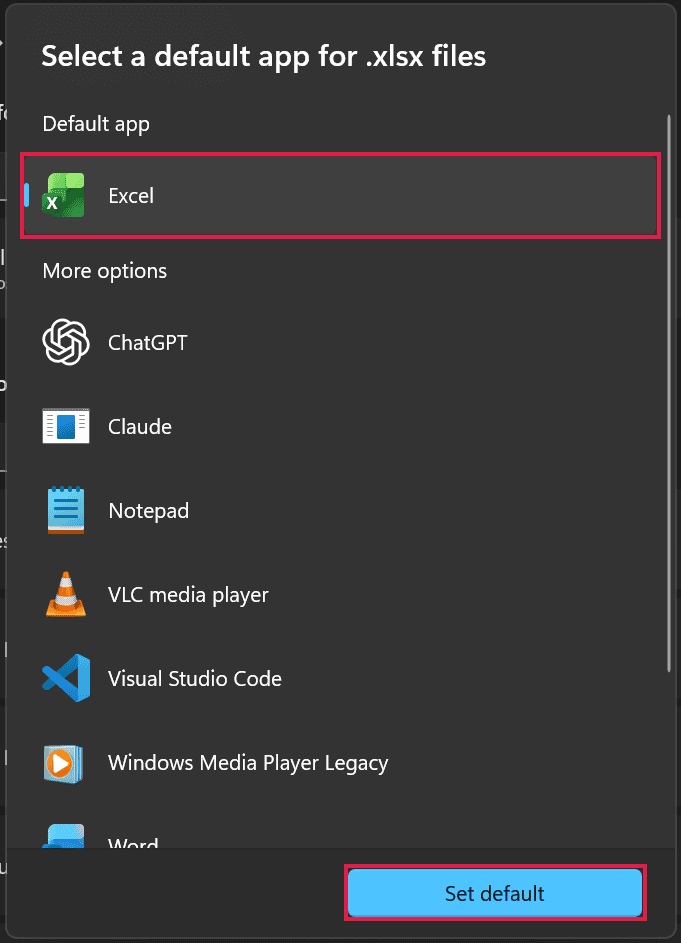
Repeat for any other Excel file types you use: .xls, .xlsm, .xlsb, and .csv.
For a quicker route, right-click the file and choose Properties. Next to Opens with, click Change, pick Excel, and confirm.
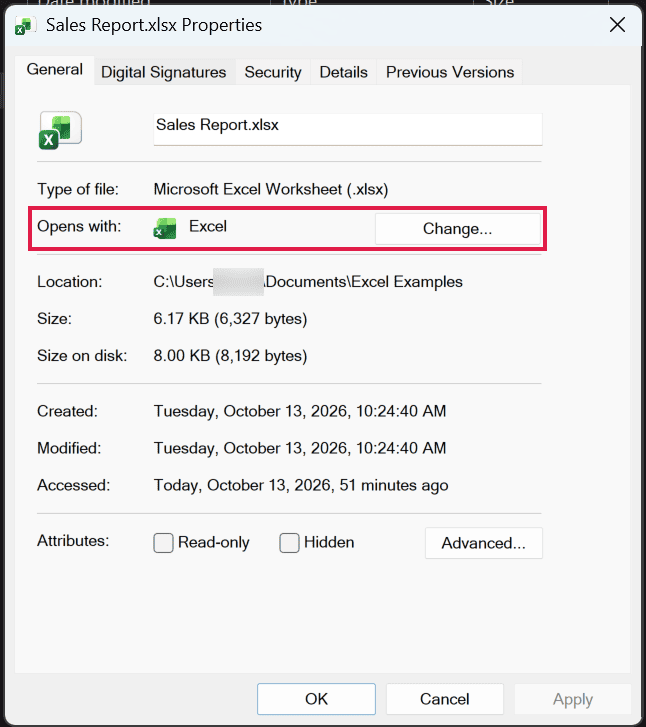
If you want a full reset instead, go to the bottom of Default apps and click Reset beside Reset all default apps.
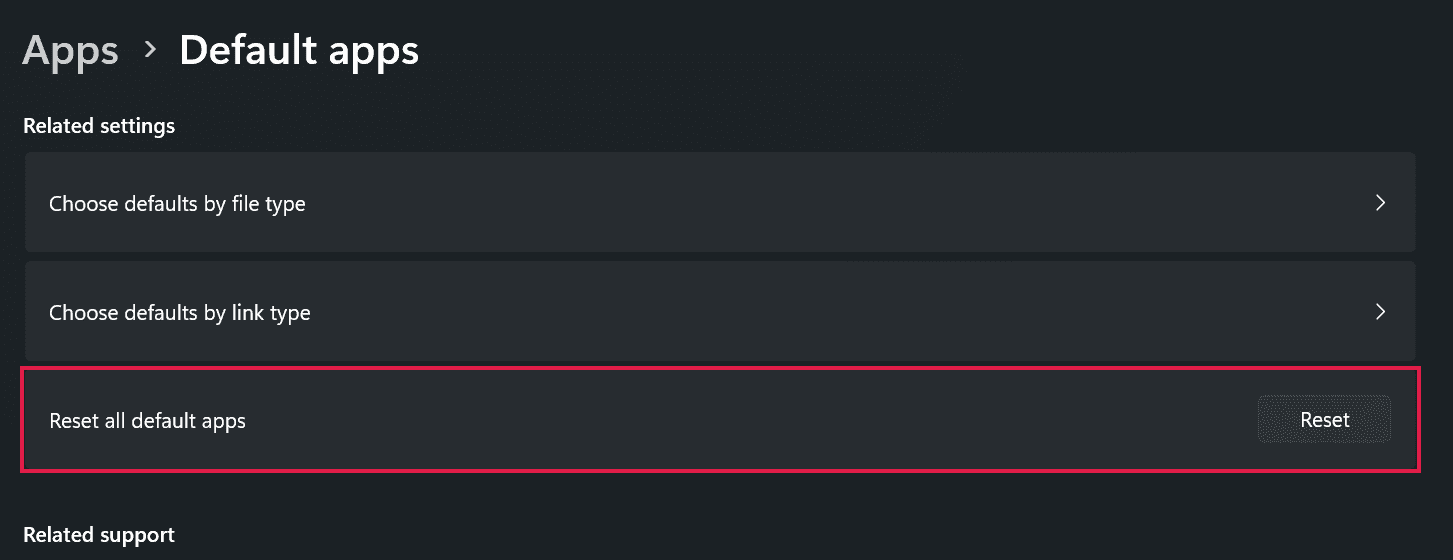
Important: This resets defaults for ALL file types and apps on your system. Any custom choice of app for a specific file extension also goes back to the default.
On Windows 10, use Settings > Apps > Default apps, then Choose default apps by file type or Reset to the Microsoft recommended defaults.
If a mismatched file association was the issue, your files should open in Excel now.
Also read: Difference Between CSV and XLSX files
Fix 6: Unhide the Workbook if Excel Opens to a Blank Gray Screen
You double-click a file and Excel opens, but all you see is an empty gray window with no cells.
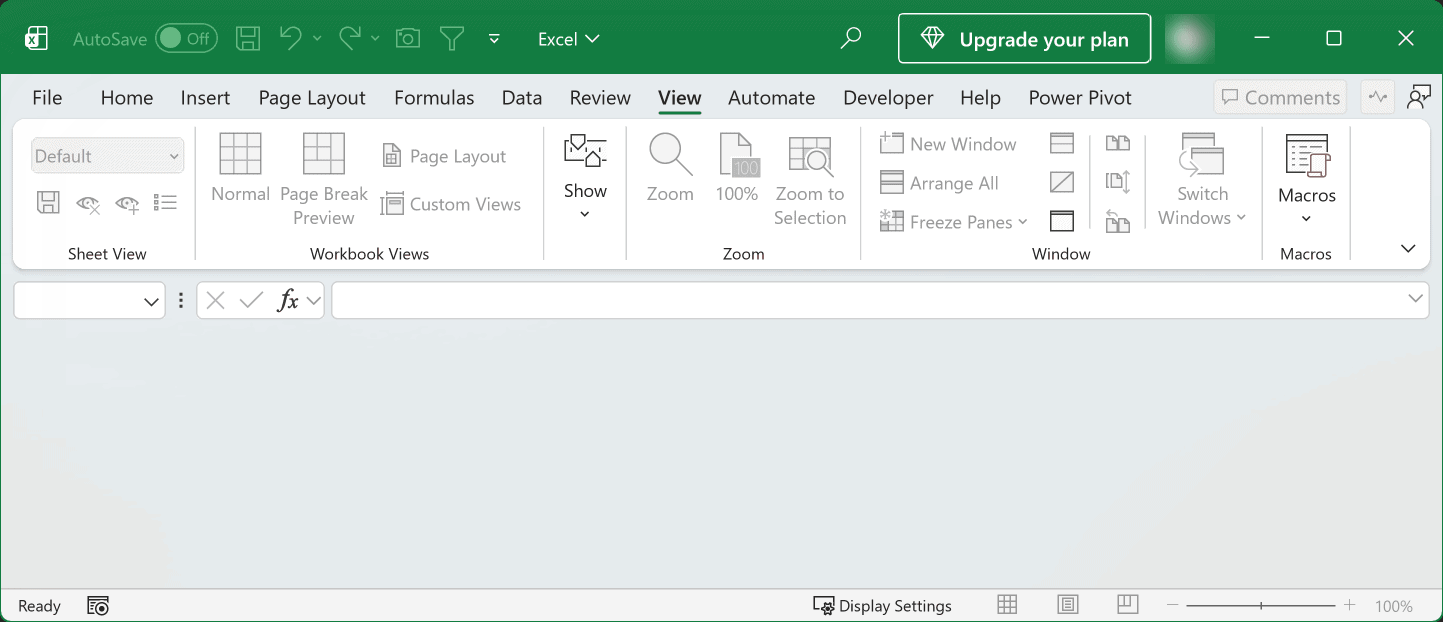
The workbook may have been saved as a hidden window. In that case, you can bring it back with Unhide.
Here are the steps:
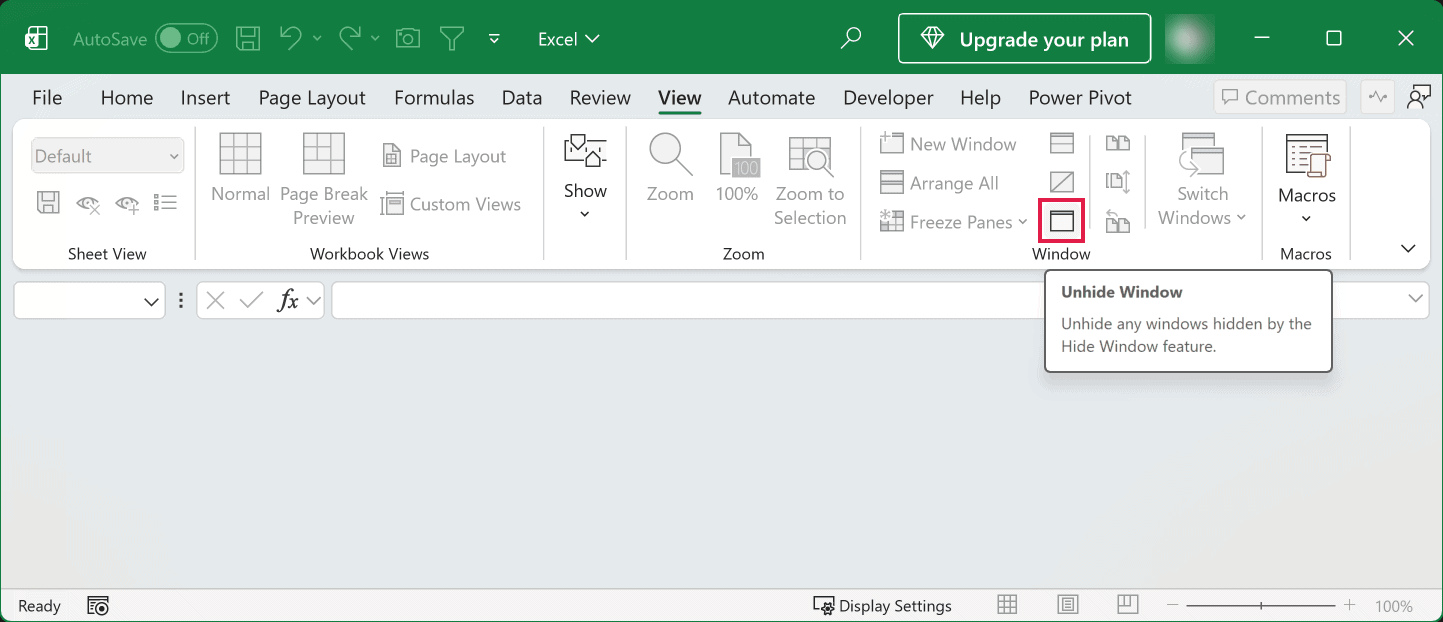
- On the View tab, click Unhide in the Window group.
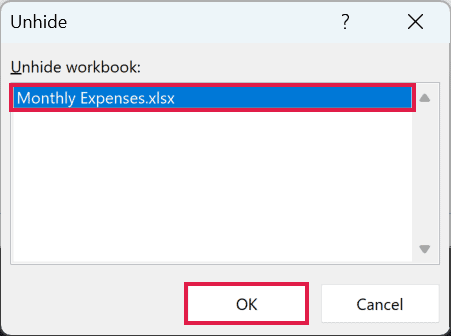
- Select the workbook in the list and click OK.
If Unhide is grayed out, no workbook is hidden, so move to the next fix.
If the workbook opens but some sheet tabs are missing, that’s a different problem.
Fix 7: Repair a Corrupt Excel File with Open and Repair
Excel works fine, but one specific file shows an error saying it can’t be opened or is corrupt.
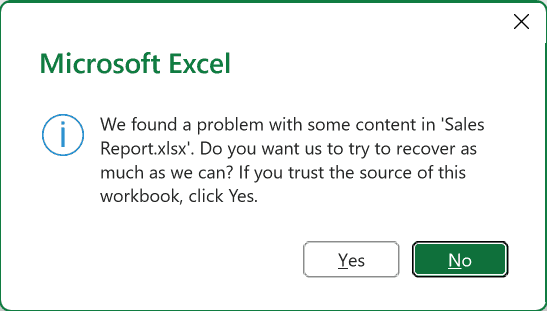
Excel often tries to repair a damaged file automatically when you open it. When it doesn’t, you can run Open and Repair yourself.
If the file is on a network drive or an external drive, copy it to your computer first and try repairing that copy.
Here are the steps to repair the file:
- Open Excel and go to File > Open > Browse.
- Select the file that won’t open. Don’t double-click it.
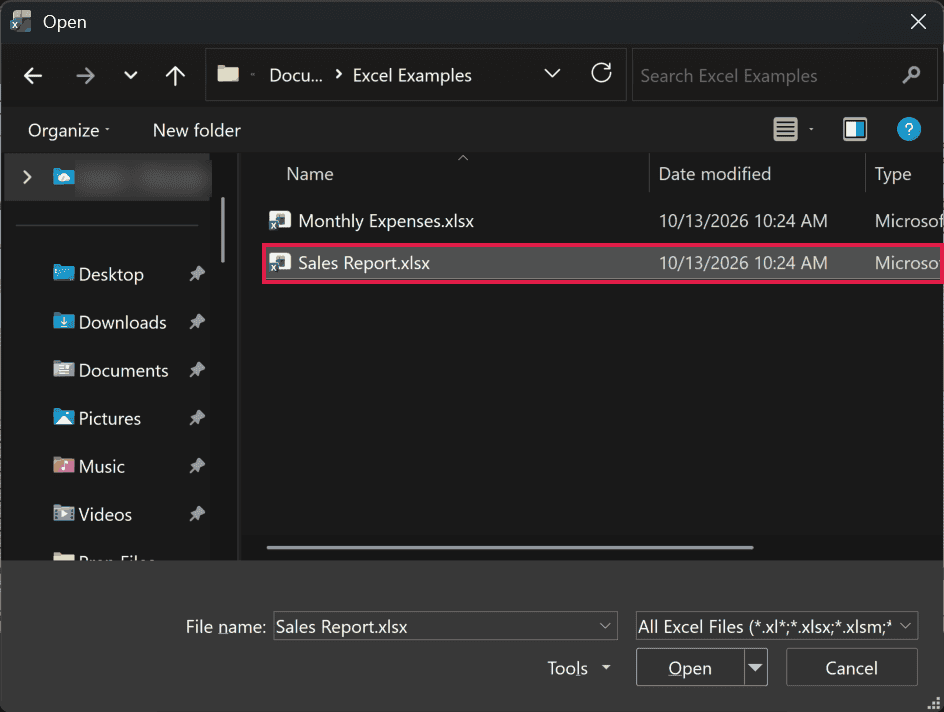
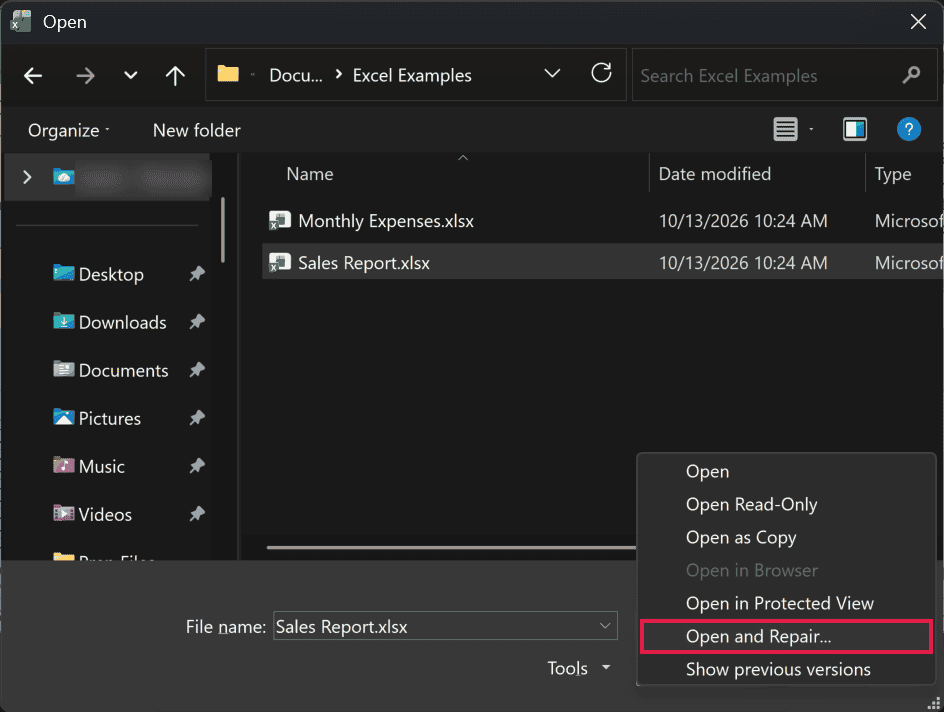
- Click the small arrow next to the Open button and choose Open and Repair.
- Click Repair to recover as much of the workbook as possible.
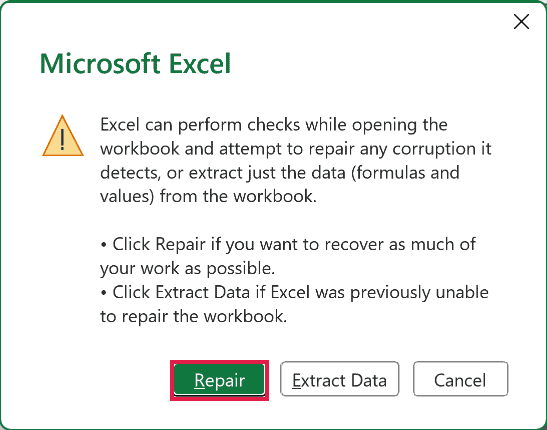
If that fails, repeat the process and choose Extract Data, which pulls out the values and formulas.
Once the file opens, save it under a new name.
Here are more ways to recover a corrupt file.
Fix 8: Uncheck “Ignore DDE” (Excel 2016 and Older Only)
Excel opens from the Start menu, but double-clicking a file doesn’t open it, or leaves you with a blank Excel window.
This fix does not work in Microsoft 365, Excel 2021, or Excel 2019. Microsoft says you can skip it in those versions, so only try it if you’re on Excel 2016 or older.
When you double-click a file, Windows sends Excel a message telling it to open that file. This uses Dynamic Data Exchange (DDE), how Excel interacts with other apps.
If Ignore other applications that use Dynamic Data Exchange (DDE) is checked, Excel ignores that message. This setting is off by default.
Here are the steps to check it in an older version:
- Open Excel from the Start menu and go to File > Options > Advanced.
- Scroll to the General section and make sure Ignore other applications that use Dynamic Data Exchange (DDE) is unchecked.
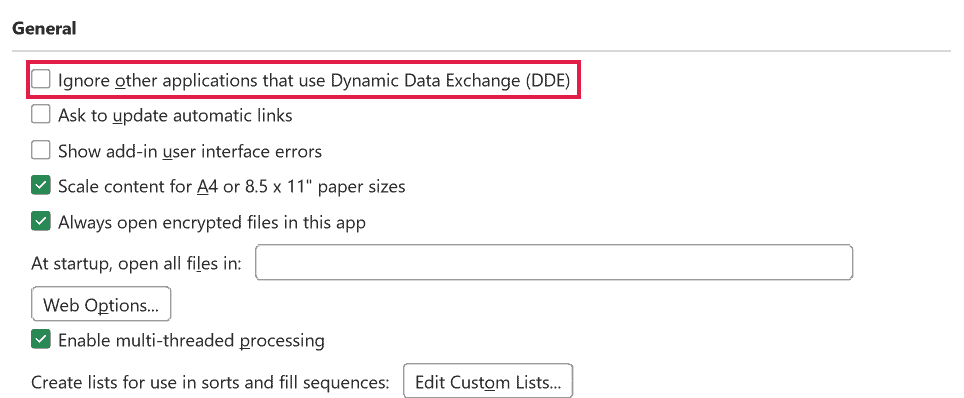
- Click OK.
If it was checked and you unchecked it, that was most likely the issue. Try double-clicking the file again.
Fix 9: Turn Off Hardware Graphics Acceleration (Not in Microsoft 365)
If Excel opens to a blank window or crashes when you try to open a file, hardware graphics acceleration could be the cause in an older version.
This option does not exist in Microsoft 365.
Microsoft has removed it from the desktop version of Excel for Microsoft 365, so you’ll only find it in older versions such as Excel 2016 and Excel 2019.
If you’re using Microsoft 365, keep Windows and your graphics driver up to date instead. Display-driver problems are what this setting used to work around.
Hardware graphics acceleration helps your system perform better in Office apps such as Excel and Word. But it can sometimes stop files opening or cause Excel to crash.
It’s on by default, and turning it off can fix the problem.
Here are the steps in an older version:
- Open Excel and go to File > Options > Advanced.
- Scroll to the Display section and check Disable hardware graphics acceleration.
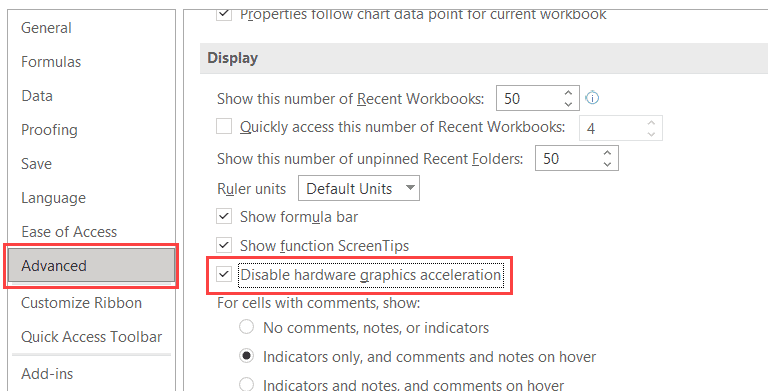
You need to check this box because its label says Disable.
- Click OK.
If graphics acceleration was the issue, your files should start opening now.
When Everything Fails, Contact Microsoft Support
And finally, there is only so much troubleshooting you can do.
Before contacting support, check for Office updates once you get Excel open, for example in safe mode.
Go to File > Account > Update Options > Update Now. A pending update often fixes startup bugs.
If nothing has worked so far, it’s best to reach out to Microsoft support and see if those guys can help you.
These issues can also come from a recent Microsoft update that inadvertently caused the problem.
Another thing you can try is posting your query on many active Microsoft forums, and the awesome folks of the Internet may come to your rescue.
I know that this is not an ideal solution, but it can help you get feedback and solutions from experts, which is helpful in almost all cases.
Most of the time, closing a stuck Excel, turning off add-ins, or resetting file associations fixes it. In rare cases, Microsoft support is the way to go.
I hope you found this tutorial useful.
Other Excel tutorials you may also like:
- How to Automatically Open Specific Excel File on Startup
- Excel Formulas Not Working: Possible Reasons and How to FIX IT!
- 10 Tricks to Fix Slow Excel Spreadsheets (Speed-up Excel)
- #REF! Error in Excel – How to Fix the Reference Error!
- How to Recover Unsaved Excel Files (All Options + Precautions)
- Arrow Keys not Working in Excel | Moving Pages Instead of Cells
- Excel Tabs/Sheets Not Showing – How to Fix?
- How to Mark an Excel Workbook as Final?

“Reset Excel File Associations” worked for me! Thank you!
my excel fil can not open. can u help me ?
The repair fix works!
Don’t know if it works yet, still to try. However, excellent and well resented guide. Well done.